
Defining fair trade accessories: what they are and why they matter
TL;DR:
- Fair trade accessories are made under verified ethical conditions, ensuring fair wages, safe workplaces, and transparent supply chains. Consumers should look for certifications like Fairtrade, GOTS, or B Corp, and ask brands for detailed supply chain information. Genuine products often show subtle hand-crafted variations and use sustainable materials like cork, which is harvested without harming trees.
Fair trade accessories are items produced under verified ethical trade conditions that guarantee fair wages, safe working environments, and transparent supply chains from maker to market. The term “fair trade” is the recognised industry standard, governed by bodies such as Fairtrade International, and it goes well beyond a marketing phrase. Defining fair trade accessories matters now more than ever: over 85% of consumers in 2026 prefer eco-friendly and ethically produced goods. That figure signals a fundamental shift in how people spend, not just a passing trend. Thecorkstore is one example of a brand building its entire range around these principles, using natural cork to create vegan accessories with full material transparency.
What are the core ethical principles that define fair trade accessories?
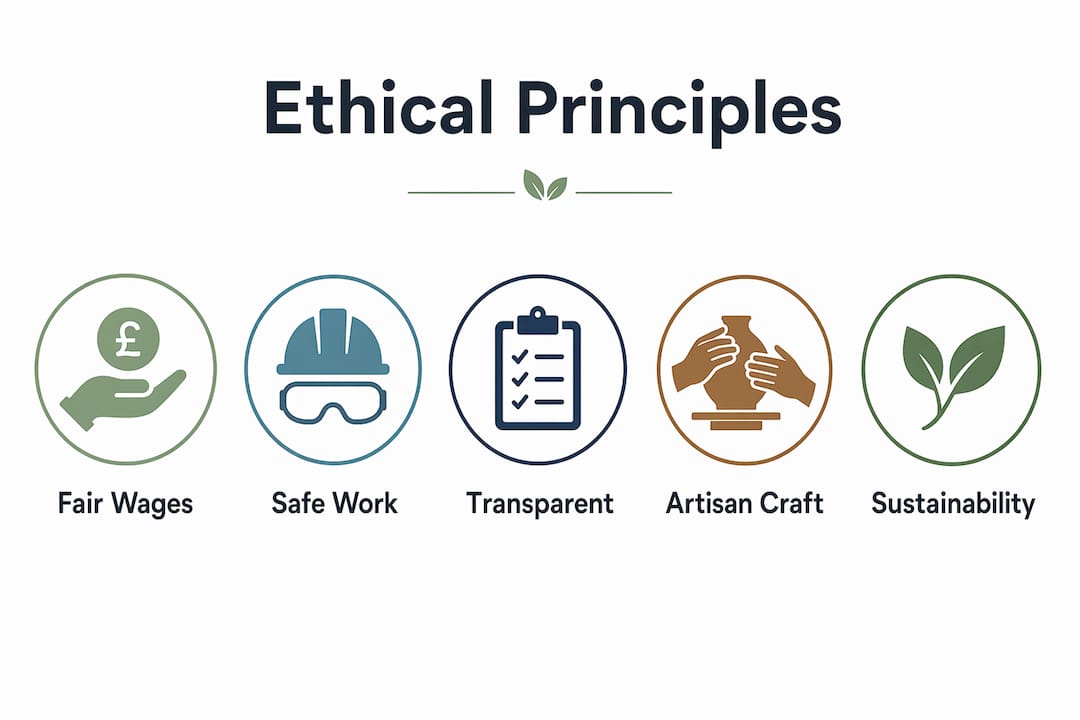
Fair trade accessories are defined by four non-negotiable principles: fair pay, safe conditions, transparent partnerships, and environmental responsibility. These are not aspirational goals. They are the baseline requirements that separate genuine fair trade products from conventional alternatives.
Fair wages and equitable pay sit at the centre of every legitimate fair trade operation. Workers receive pay that meets or exceeds local living wage standards, not the minimum legal wage, which in many producing countries falls well below what a family needs. Fair trade fashion shifts focus from low-cost production to dignified partnerships, which means the wage bill is treated as a commitment, not a cost to cut.
Safe working environments are equally non-negotiable. Fair trade standards prohibit child labour, forced overtime, and unsafe factory conditions. Independent audits verify compliance, and producers must demonstrate ongoing improvement rather than one-time compliance.
Transparent and stable trading partnerships are what distinguish fair trade from charitable giving. Brands commit to long-term relationships with cooperatives or artisan groups, often paying a portion of the order upfront so makers can buy materials without taking on debt. Fair trade craft also preserves traditional skills passed down through generations, supporting cultural heritage alongside economic empowerment, particularly for women in artisan communities.
Environmental considerations vary by product, but genuine fair trade frameworks include assessments of material sourcing, waste, and chemical use. Cork, for example, is harvested without felling trees, making it a natural fit for brands that want to align environmental and ethical commitments.
- Fair wages meet or exceed local living standards, not just legal minimums
- Safe conditions are verified by independent audits, not self-reported
- Long-term partnerships replace transactional, lowest-bid supplier relationships
- Environmental impact is assessed alongside labour standards
Pro Tip: When a brand lists its artisan partners by name and location on its website, that visibility is a strong signal of genuine fair trade practice. Anonymised “supplier networks” are a red flag.
How can consumers identify genuine fair trade accessories?
Certifications are the most reliable starting point for identifying authentic fair trade accessories. Certifications like Fairtrade Certified, GOTS, or B Corp require rigorous standards and independent audits, which means a brand cannot simply self-declare compliance. Each label carries a specific scope: Fairtrade International covers trade terms and wages; GOTS (Global Organic Textile Standard) covers organic fibre processing; B Corp assesses overall business ethics. Knowing which certification applies to which claim stops you being misled by irrelevant badges.
What transparency looks like in practice
Genuine ethical brands publish supply chain information that goes beyond a vague “responsibly sourced” statement. Look for named maker communities, audit report summaries, and details about how the premium paid to producers is used. Supply chain transparency verified by independent audit reports is the clearest way to distinguish genuine ethical production from greenwashing. Some brands now use NFC tags embedded in products, allowing you to scan and view the item’s production journey directly on your phone.
Signs of genuine artisan craftsmanship
Genuine fair trade artisanal accessories display subtle hand-crafted variations that signal human creation. Slight differences in stitching, dye depth, or hammering patterns are intentional marks of individual makers, not quality defects. Perfect uniformity across every unit is a reliable indicator of mass production, regardless of what the label claims.
Pro Tip: Check the brand’s eco-friendly accessory guide for practical markers to look for when shopping in person or online.
| Indicator | Genuine fair trade | Possible greenwashing |
|---|---|---|
| Certification | Named body, verifiable (Fairtrade, GOTS, B Corp) | Vague “eco” or “ethical” badge with no issuing body |
| Supply chain info | Named makers, locations, audit summaries | “Responsibly sourced” with no detail |
| Craftsmanship | Subtle variations, handmade marks | Perfect uniformity across all units |
| Material claims | Specific origin, verified environmental data | “Vegan” or “natural” without further context |
One important nuance: vegan leather is not an ethical seal. Many vegan leather products are made from fossil fuel plastics, which carry their own environmental costs. Material origin and end-of-life impact both matter when assessing a product’s true ethical credentials.
How does fair trade differ from handmade, artisan, and sustainable labels?
These four terms overlap constantly in ethical fashion marketing, but they describe different things. Fair trade focuses on supply chain ethics; handmade focuses on production method; artisan focuses on maker skills. A product can be all four at once, or only one. Understanding the distinction stops you paying a fair trade premium for something that only qualifies as handmade.
Handmade describes how a product is made: by hand rather than machine. It says nothing about whether the maker was paid fairly or worked in safe conditions. A handmade bag produced in an exploitative workshop is still handmade.
Artisan describes the skill level and tradition of the maker. Artisan goods carry cultural and technical value, but the label carries no trade or labour standard. An artisan can be underpaid.
Sustainable describes environmental impact: materials, production processes, and end-of-life considerations. A product can be environmentally sustainable but produced under poor labour conditions.
Fair trade is the only label that specifically addresses the trading relationship: who gets paid, how much, under what conditions, and with what level of accountability. It is the only one of the four that requires a verified, audited standard to use legitimately.
- Handmade = production method
- Artisan = maker skill and tradition
- Sustainable = environmental impact
- Fair trade = ethical trade relationship, verified and audited
The most credible ethical accessories combine all four. A cork wallet made by a named artisan cooperative, using sustainably harvested cork, under Fairtrade-aligned trade terms, represents the full picture. Thecorkstore’s approach to sustainable accessory choices reflects exactly this kind of layered commitment.
Why do fair trade accessories cost more, and is the price justified?
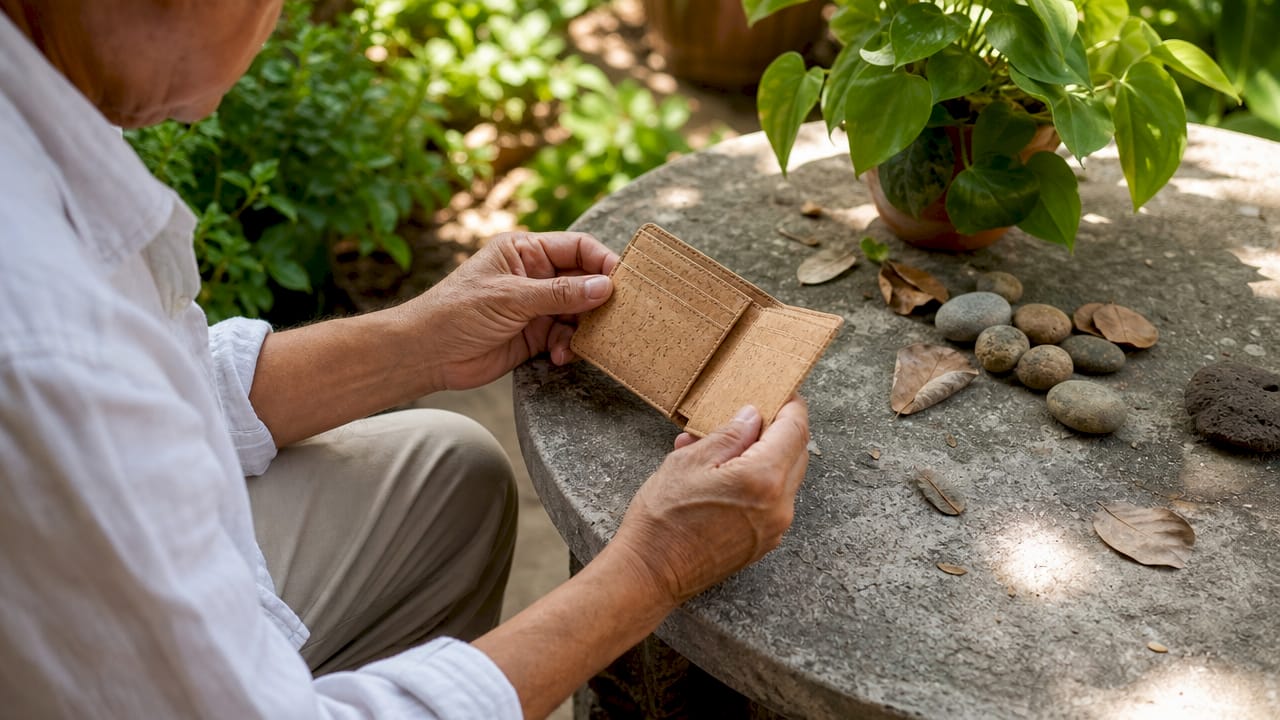
Fair trade accessories cost more because they reflect the real cost of making something ethically. Price reflects true labour costs, transparent sourcing, and quality craftsmanship rather than the arbitrary markups or hidden labour exploitation found in fast fashion. When a wallet costs £12 in a fast fashion outlet, that price is only possible because someone in the supply chain absorbed a cost they should not have had to.
Fair wages, safe facilities, and audited supply chains all add to the unit cost. So does durability. Ethical accessories are typically designed to last years, not seasons. That longevity changes the cost-per-use calculation significantly. A £60 cork wallet used daily for five years costs less per day than a £15 alternative replaced every year.
Pro Tip: Calculate cost per use before comparing prices. Divide the purchase price by the number of times you expect to use the item in a year, then multiply by expected lifespan. Ethical accessories almost always win this calculation.
- Fair wages and safe conditions are built into the unit price
- Audited supply chains require ongoing investment from the brand
- Durable design reduces replacement frequency and total spend
- Fast fashion pricing hides labour costs rather than eliminating them
What practical steps help consumers support fair trade accessories?
Supporting fair trade accessories effectively requires more than good intentions. These steps give you a reliable process.
- Research certification labels before you buy. Check the certifying body’s website to confirm the brand is listed. Fairtrade International, the World Fair Trade Organization, and B Lab all maintain public directories.
- Read the brand’s transparency page. A genuine ethical brand publishes specific information about its makers, not just aspirational language. Look for named cooperatives, countries of origin, and audit references.
- Ask questions directly. Email the brand and ask where a specific product was made and by whom. Brands with nothing to hide answer quickly and with detail.
- Prioritise durability over novelty. Ethical consumption means buying less and keeping longer. Choose pieces designed for longevity rather than seasonal trends.
- Learn to spot greenwashing. Thecorkstore’s guide on spotting sustainable materials covers the specific material and labelling claims worth scrutinising.
- Support brands that share supply chain stories. When a brand publishes audit results or maker profiles, that transparency deserves your loyalty. It costs the brand effort and accountability to maintain.
Ethical accessories represent an investment in social impact, not just material or style. Every purchase either reinforces or undermines the trade conditions behind it.
Key takeaways
Fair trade accessories are the only accessory category defined by a verified, audited ethical trade relationship covering wages, conditions, and supply chain transparency.
| Point | Details |
|---|---|
| Core definition | Fair trade accessories guarantee fair wages, safe conditions, and transparent supply chains, verified by independent audits. |
| Certification matters | Labels like Fairtrade International, GOTS, and B Corp are verifiable; vague “eco” badges are not. |
| Craftsmanship signals authenticity | Subtle hand-crafted variations indicate genuine artisan production; perfect uniformity suggests mass manufacture. |
| Price reflects real costs | Higher prices cover fair wages, durable design, and audited sourcing, not arbitrary markups. |
| Labels overlap but differ | Fair trade addresses trade ethics; handmade, artisan, and sustainable each describe different qualities. |
Why defining fair trade accessories changed how I shop
I spent years buying what I thought were ethical accessories based on packaging alone. A linen bag with a leaf logo. A wallet described as “artisan crafted.” None of it held up to scrutiny once I started asking actual questions. The brand behind the linen bag could not name its supplier. The wallet maker had no audit history.
What shifted my thinking was understanding that fair trade is a structural commitment, not a mood. It requires a brand to build its entire sourcing model around accountability, which means it costs more to maintain and more to buy. That is not a flaw in the system. It is the system working correctly.
The consumer misconception I see most often in 2026 is that “vegan” equals “ethical.” It does not. A vegan product made from fossil fuel plastic, by underpaid workers, with no supply chain visibility, fails on every fair trade measure. Material choice and trade ethics are separate questions that both need answering.
My advice is simple: treat your accessories like you would a long-term investment. Ask who made it, where, and under what conditions. If the brand cannot answer those three questions clearly, the product does not qualify as fair trade regardless of what the label says. The human element behind each piece is the point. Honour it with your spending.
— Aaron
Cork accessories that put fair trade principles into practice
Thecorkstore builds its entire range around the principles covered in this article: natural materials, transparent sourcing, and vegan production with no animal harm.
Cork is harvested from the bark of cork oak trees without felling them, making it one of the most genuinely sustainable materials available. Thecorkstore’s cork wallet gift set is a practical example of ethical accessory principles applied to an everyday product. It is vegan, durable, and made from a material with a clear and verifiable environmental story. For a wider selection of ethically made options, the vegan cork gift collection covers everything from handbags to purses, all grounded in the same commitment to responsible production.
FAQ
What is a fair trade accessory?
A fair trade accessory is a product made under verified ethical trade conditions that include fair wages, safe working environments, and transparent supply chains, typically certified by a recognised body such as Fairtrade International.
How do I know if an accessory is genuinely fair trade?
Look for certifications from named bodies like Fairtrade International, GOTS, or B Corp, and check that the brand publishes specific supply chain information including maker names and audit references.
Is vegan the same as fair trade?
No. Vegan describes material origin (no animal products), while fair trade describes trade and labour ethics. A vegan product can still be produced under exploitative conditions with no fair trade compliance.
Why are fair trade accessories more expensive?
The higher price reflects real costs: fair wages, safe production facilities, and independently audited supply chains. Durability also adds value, as ethical accessories are designed to last significantly longer than fast fashion alternatives.
What certifications should I look for when buying ethical accessories?
Fairtrade International covers trade terms and wages; GOTS covers organic textile processing; B Corp assesses overall business ethics. Each applies to different aspects of production, so check which is relevant to the product type you are buying.